On 2nd February,
2026, staff members took part in a Disability Inclusion Awareness Training,
courtesy of Outbox Uganda and Light for the World under the 10X Program, Bold Women GO DIGITO.
The session aimed
to bridge the gap between the Disability
Inclusion Facilitators (DIFs) assigned to the Mkazipreneur Hub and staff
members, while strengthening inclusive practices for Persons With Disabilities (PWDs), a core focus of the program.
Denish Komakech
from Light for the World emphasized the importance of making essential
accommodations to ensure that people with impairments can fully participate in
available opportunities.
The training also
highlighted the different types of impairments people experience and the
barriers they face, which often limit their full inclusion in society.

Denish
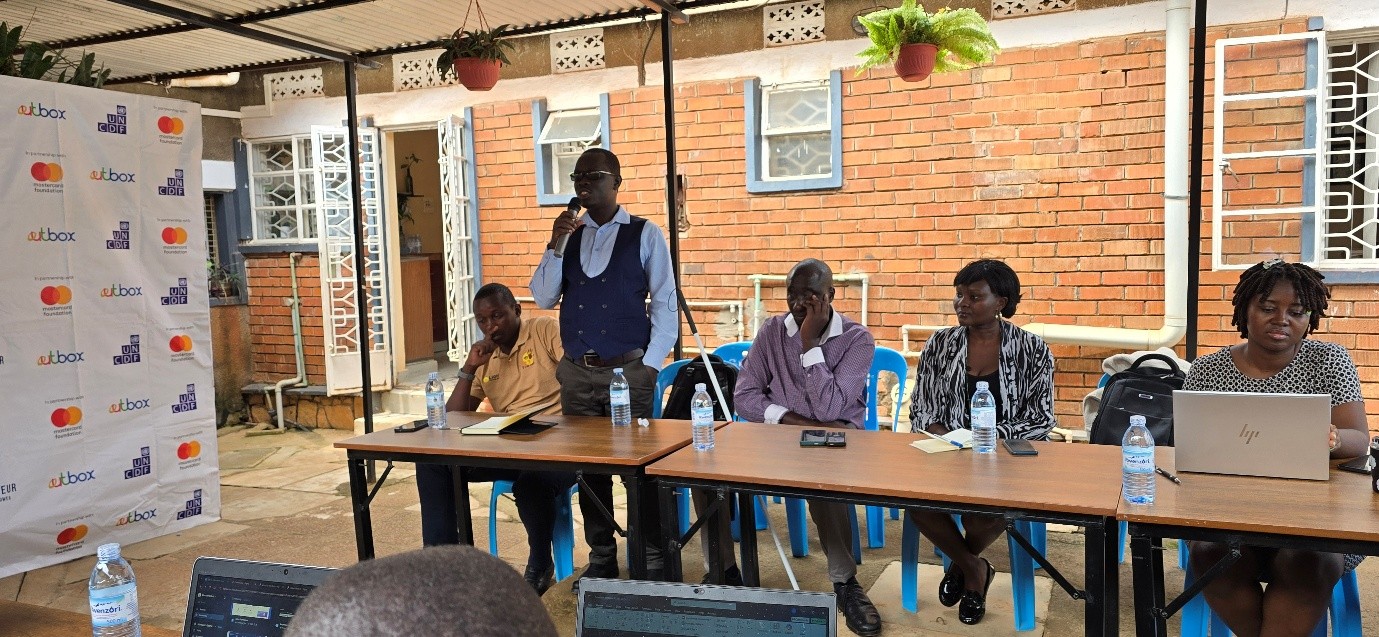
Komakech (standing) addresses members during the training.
Komakech noted the stark difference between impairments and disabilities as their definitions tend to be misinterpreted a lot.
IMPAIRMENT
- The loss of an ability or part of a functional body structure i.e. blindness,
loss of a limb or hearing loss.
BARRIER - An obstacle that
makes access to a necessity difficult i.e. a visually impaired person cannot
read words projected on a screen.
DISABILITY
- The impact caused when the person with
an IMPAIRMENT faces a BARRIER.
In addition,
participants also learnt the best, respectful ways in which to address disabled
people while interacting with them so as to make them feel and be included.

The call for more
inclusive platforms for Persons With Disabilities (PWDs) has revealed the many
barriers they continue to face, especially in spaces that lack the necessary
tools to meet their needs.
Olivia Nankinga,
who faces a hearing impairment, recalled attending a workshop where no one was
aware that she could not hear.
“I sat through the
workshop and did not hear a thing at all, and I struggled to use TalkBack. I
only told people at the end of the session, when it was too late to help me,”
she shared.
Briton Mwijukye,
who is visually impaired, also shared his experience of receiving WhatsApp
videos without audio and images that lack audible descriptions.

(L-R)
Olivia Nankinga and Briton Mwijukye.
Through such
initiatives, we aim to create environments where PWDs are included and
supported to access basic human needs and resources, enabling them to thrive
both in business and in their personal lives.